

BETTER LONG DURATION STATIONARY BATTERIES
We turn water, iron, and organics into an electrolyte that outperforms vanadium on performance and cost


OUR VISION
A world where green energy is always there when you need it
75% of today's flow batteries use a vanadium electrolyte. It has been used in flow batteries since the 1980s. It became popular because using the same element in different oxidation states in both tanks reduces the problem of cross-contamination. It’s much easier to rebalance crossover compared to systems which have different active elements in the anolyte and catholyte.
But 90% of it is mined far from Europe, in China and Russia, and a limited supply causes high price volatility. It is also toxic, requires a very low pH, and causes the system to quickly corrode.
Our electrolyte uses common materials available everywhere on earth. This reduces costs for the raw material and transport. Our chemistry operates in an alkaline solution with a ‘friendlier’ pH closer to neutral enabling performance enhancing components and less wear and tear. And our elements are not toxic. Iron is naturally present in our bodies central to many key functions, like the transportation of oxygen.
We can even replace vanadium in existing flow batteries so you don’t need a system redesign.

OUR TECHNOLOGY
Our quick comparison guide on how we perform on large stationary applications.
Contact us for more information.
Benefit | Lithium-ion Batteries | Wolf Batteries |
|---|---|---|
Cost | ||
Scalable | ||
Customizable | ||
Made from bio-waste | ||
Low toxicity | ||
Low ecotoxicity | ||
Fire safe | ||
Weight |
OUR MARKETS

Pain Points: Weak grids, limited capacity, need continous power to maintain cooling
-
100% non-interrupted power for critical operations from solar power system
-
No need to service and operate fuel expensive diesel generators
-

Pain Points: Grid limitations constrain growth of current and expansion for future tenants, grid upgrades expensive and time consuming.
-
Increased rental revenue from expansion of current and future tenants
-
Safe energy storage with 0% fire risk
-
Space efficient stored below ground
-

Pain Points: High charging costs, limited availability and lowered productivity from public charging.
-
Charge EV fleet with solar panels during night time for full day operations
-
No need for expensive grid upgrades
-

Pain Points: 99.9999% uptime requirement, high power usage, grid congestion.
-
Safe, non-flammable, non-toxic, long-lasting alternative to lithium, more reliable than diesel generators
-
Meet government and client sustainability requirements
Secure your uptime with green energy with storage built for the long run
-
OUR TEAM

CEO Emil Jersling
Tech entrepreneur with engineering degree from Imperial College London and RWTH Aachen, MBA from INSEAD, and 20-years experience building ventures in Europe, Asia, and Latin America.
CTO Nicolas Daub
PhD in electro-, and organic chemistry from Eindhoven University of Technology. Specialized on flow batteries, electrolyte patent holder, 6-years experience developing redox flow battery technology.
Want to be part of the future of batteries?
OUR ADVISORS
Leaders in Science
Mariano Grünebaum

Helmholtz Institute Münster
Redox Flow and Aqueous Battery Systems
Clare Gray
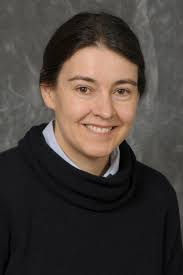
University of Cambridge
In-situ NMR Studies of Battery and Supercapacitor Function
Antoni Forner-Cuenca

Eindhoven University of Technology
Electrochemial technologies and porous materials
Edwin Otten

University of Groningen
Molecular synthesis, physical (in)organic chemistry, and electrochemistry
CONTACT US

Let's talk about your battery needs.
Send us a message and we'll be in touch.